Buying orthopedic implants in bulk from China can reduce costs, but quality failures can create serious clinical and financial consequences. How to avoid unqualified orthopedic implants in bulk purchase requires more than comparing supplier prices. It requires documented verification, technical judgment, and disciplined communication.
In practice, reliable buyers examine the manufacturer’s quality system before discussing large quantities. Check ISO 13485 certification, applicable NMPA records, and destination-market approvals. Confirm that certificates match the exact product, factory, and manufacturing site. A certificate alone proves little.
Request material certificates for titanium, stainless steel, or cobalt-chrome components. Review dimensional drawings, surface-finish specifications, sterilization methods, and packaging controls. Ask for representative samples before approving production. Measure them independently when possible. Small inconsistencies matter.
Supplier audits can reveal practical problems. Look for clean production areas, calibrated instruments, controlled storage, and complete batch records. Confirm traceability from raw material to finished implant. Ask how the supplier handles complaints, recalls, and nonconforming products. Weak answers deserve attention.
Do not rely only on polished videos or impressive websites. Visit the facility, or use a qualified third-party auditor. Speak with technical staff, not only sales representatives. Their answers often expose process maturity.
The lowest quotation may hide inspection gaps, substituted materials, or unstable production. However, a higher price does not automatically guarantee quality. That assumption also needs testing.
Use a written quality agreement with acceptance criteria, inspection rights, change-control requirements, and shipping conditions. Keep purchase records and retain samples for every batch. If documentation feels rushed or incomplete, pause the order. Orthopedic implants require patience, evidence, and professional review before they reach patients.
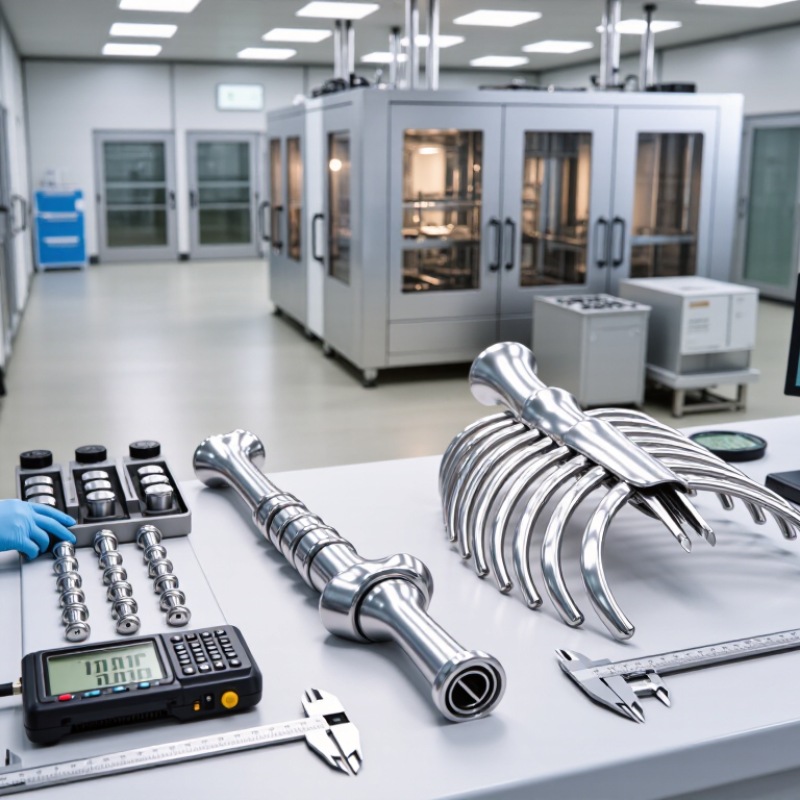
To avoid unqualified China orthopedic implants, define measurable quality standards before requesting bulk quotations. Specify the implant’s intended use, alloy, dimensions, surface finish, mechanical strength, sterility, packaging, and shelf life. For titanium components, require documented compliance with ASTM F136 or an equivalent material standard. Apply ISO 10993 for biological evaluation and ISO 13485 for quality management systems. Sterile products should also meet ISO 11135 or ISO 11137, depending on the sterilization method.
Numbers matter. The FDA Medical Device Recall Report for fiscal year 2023 recorded 1,225 medical-device recalls across the market. The WHO’s patient-safety fact sheet reports that approximately one in ten patients experiences harm during healthcare delivery. These figures support stricter incoming controls, not assumptions based on factory size. Request batch-level material certificates, heat-treatment records, dimensional inspection reports, sterilization validation, and complete lot traceability. Use an independent laboratory for chemical composition, fatigue testing, corrosion resistance, and packaging integrity.
Do not trust certificates alone. Audit whether the tested lot matches the shipment. Define sampling plans and rejection limits in the purchase agreement. A supplier should explain nonconformity handling, corrective actions, and recall communication within a fixed time. In practical sourcing reviews, missing traceability is often more worrying than a minor cosmetic defect. Still, visual inspection can miss fatigue risks. That remains an uncomfortable gap. Require retained samples, calibrated instruments, and signed release records before container loading. A low price cannot compensate for uncertain evidence.
Define intended use, alloy, dimensions, surface finish, strength, sterility, packaging, and shelf life. Use measurable specifications. Require recognized material, biological safety, quality-system, and sterilization standards. Vague terms like “premium quality” are difficult to enforce.
Request material certificates, heat-treatment records, dimensional reports, sterilization validation, and lot-traceability records. Ask for raw test data, not only summary certificates. Signed release records should be completed before shipment. Missing records deserve serious attention.
Request production-equivalent samples, not showroom pieces. Check dimensions, surface finish, markings, packaging seals, and traceability codes. Use calibrated gauges for critical measurements. Photograph each sample and record every result.
An independent laboratory can test composition, mechanical strength, fatigue resistance, corrosion resistance, and packaging integrity. Sterile products may require sterilization-performance testing. Compare results with the approved technical file. One sample can pass while later units drift.
A certificate may not prove that the tested lot matches the shipment. Verify lot numbers, production dates, and retained samples. Review inspection history, nonconformities, changes, and corrective actions. Trust needs evidence.
Define acceptance criteria, sampling plans, rejection limits, batch documents, and complaint procedures. Require written approval for material, machining, sterilization, or packaging changes. State who pays when test results conflict. Set quarantine and replacement procedures clearly.
Compare lot lists with carton labels before unloading. Inspect seals, labels, dimensions, and visible damage. Quarantine goods until inspection is complete. Small mismatches matter. Do not release products based only on attractive packaging.
Keep retained samples from every approved lot. Record complaints, returns, and unusual packaging damage in one searchable log. Review trends monthly with clinical and purchasing teams. Repeat sampling after six months. Checklists can create false confidence.
How to avoid unqualified orthopedic implants in bulk purchase begins with establishing clear and measurable quality standards. Buyers should define requirements for materials, design, dimensions, sterilization, packaging, labeling, and intended clinical use before contacting suppliers. Each manufacturer should be carefully evaluated through valid licenses, relevant certifications, production records, quality management procedures, and evidence of consistent manufacturing capability. Buyers should also confirm that product information is complete, accurate, and supported by reliable documentation.
Before placing a bulk order, request representative samples and arrange independent testing when appropriate. Inspect surface quality, structural integrity, material composition, packaging, and traceability details, while verifying that products meet the agreed specifications. Written contracts should define inspection methods, acceptance criteria, documentation, responsibilities, corrective actions, and procedures for handling nonconforming products. Finally, maintain batch records, conduct periodic supplier reviews, and monitor product performance after delivery. These steps create a controlled procurement process that reduces quality risks and supports patient safety.

 Nipa Orthopedic Implants