Orthopedic implants are not ordinary cargo. They may include polished titanium stems, porous fixation surfaces, ceramic heads, and sterile barriers that tolerate little abuse. A dropped carton, hidden moisture, or an unrecorded temperature excursion can compromise confidence before surgery begins. That is why the question “How to ensure the safety of orthopedic implants during transportation” deserves a validated, evidence-based answer.
The World Health Organization reports that approximately one in ten medical products in low- and middle-income countries is substandard or falsified, although this figure is not implant-specific. It still highlights the importance of traceability, tamper evidence, and controlled distribution. FDA guidance on medical-device packaging also emphasizes protection from physical damage and preservation of package integrity. ISO 11607 and ASTM D4169 provide practical foundations for sterile-barrier validation, vibration testing, shock testing, and climatic conditioning. ISTA procedures add realistic distribution simulations.
Walter Soroka, author of Fundamentals of Packaging Technology, describes packaging as “the science, art, and technology of enclosing and protecting products for distribution, storage, sale, and use.” His statement remains relevant to implant logistics. Protection is more than a strong box. It requires fit-tested cushioning, sealed inner packaging, humidity control, shock indicators, and documented handoffs. Every transfer matters.
Small failures matter.
Real-world handling is imperfect. Labels can peel. Pallets can lean. Data loggers can be placed incorrectly. A robust transport plan therefore combines engineering controls, trained personnel, carrier qualification, and post-delivery inspection. The package may look untouched, yet internal movement can remain invisible. Careful validation, honest deviation reporting, and continuous review create the dependable system orthopedic patients ultimately need.
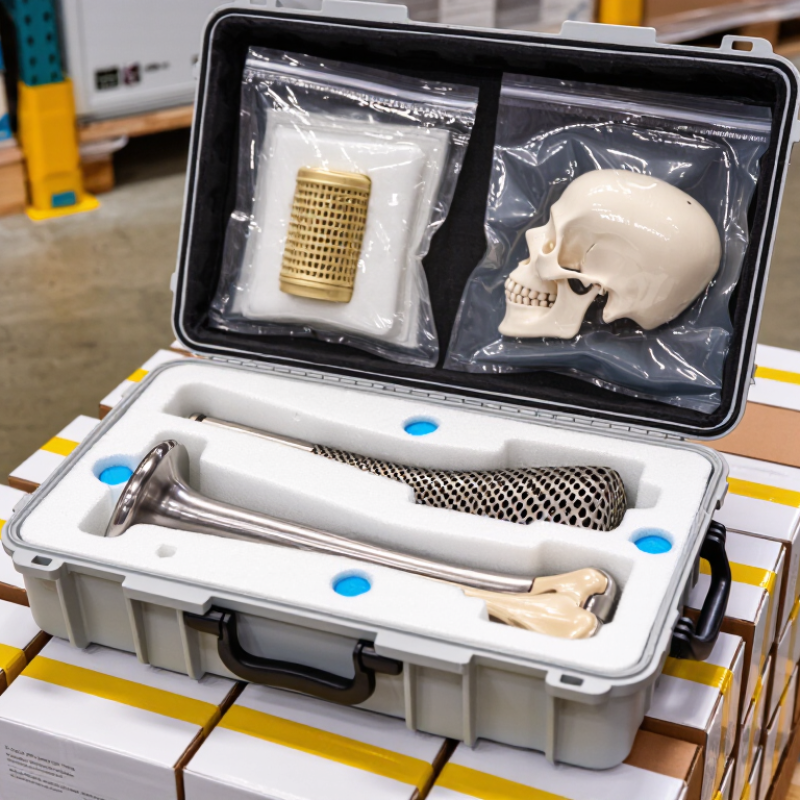
How to Ensure Orthopedic Implant Safety in Transit?
Orthopedic implants face several risks before reaching the operating room. Impact is often the most visible threat. A dropped carton can damage a sterile barrier, deform a component, or loosen protective supports. Small shocks matter. Repeated vibration may create hidden wear, especially when metal parts contact each other. Compression is another concern. Heavy cartons stacked above implant packages can crush corners and weaken seals.
Temperature and humidity also require close attention. Cold conditions may make some packaging materials brittle. Heat can soften adhesives or distort protective inserts. Moisture may encourage corrosion on exposed surfaces or damage labels. Cold can mislead. A package may look intact while condensation has formed inside after a temperature change. Transit teams should review seasonal routes, vehicle storage areas, and transfer points rather than relying only on warehouse conditions.
Handling errors create less obvious risks. Incorrect orientation, missing cushioning, mixed product numbers, and incomplete records can delay verification. In practical receiving checks, clear labeling and traceable inspection records help teams identify problems early. Packaging should be tested against realistic drops, vibration, compression, and environmental changes. Yet testing is not enough. A route may include an unplanned airport transfer or a crowded loading dock. That gap deserves honest review. Perfect transit control is unrealistic, but weak points should never be treated as normal.
Orthopedic implants need packaging that protects both sterility and physical integrity during transit. The material choice should match the implant’s weight, shape, surface finish, and sterilization method. A sterile barrier made from validated medical-grade film or rigid material can reduce microbial entry. It must also resist tearing, punctures, and seal failure. Small defects matter.
Cushioning materials should hold the implant firmly without pressing against delicate edges or porous surfaces. Molded supports, protective trays, and shock-absorbing layers can limit movement inside the carton. Excess space allows repeated impacts. Too much pressure may cause deformation. Moisture-resistant outer packaging helps protect seals during storage and transportation, especially when temperature changes create condensation.
Packaging engineers should review transit data, not rely on appearance alone. Vibration, compression, drop, and temperature testing can reveal weaknesses before shipment. Seal strength and package integrity checks should be documented for every approved configuration. Clear labeling supports careful handling, while traceability records help investigate damage or sterility concerns. In practice, a package may pass laboratory testing and still fail after rough handling. That risk deserves honest review. Inspecting returned packages can expose crushed corners, shifted inserts, or hidden film abrasions that routine checks miss.
Select Packaging Materials That Protect Sterility and Structure
A multilayer packaging system is typically required for orthopedic implants. The sterile barrier system helps maintain sterility, while rigid trays, cushioning, and shipping containers reduce the risk of puncture, impact, vibration, compression, moisture, and contamination during distribution. Packaging performance should be verified through sterile-barrier and transport testing in accordance with applicable requirements such as ISO 11607 and ASTM D4169.
Orthopedic implants can be damaged before they reach a surgical facility. Temperature, moisture, shock, and vibration require deliberate control during shipping. A reliable transit plan starts with documented limits for each implant and its packaging. Use calibrated data loggers to record temperature and humidity throughout the journey. Place sensors near the product, not only inside the outer carton. Review the data against approved acceptance criteria. A clean-looking package proves very little.
Moisture deserves close attention. Desiccants, sealed barriers, and moisture-resistant cartons can reduce corrosion and packaging failure. However, sealing a damp product creates another problem. Inspect packaging materials before packing, especially after storage in humid areas. Temperature excursions should trigger a documented assessment, not an automatic release or rejection. If the sterile barrier appears compromised, isolate the shipment and follow the established quality procedure.
Shock and vibration often occur during loading, road transport, and warehouse handling. Cushioning should limit movement without placing pressure on the implant or sterile barrier. Drop tests and vibration studies can reveal weak points before routine distribution. Secure cartons tightly, but avoid excessive compression. Clear handling instructions help, though labels alone cannot protect a poorly packed unit. The hardest part is consistency. Keep packing records, sensor files, inspection photos, and deviation reviews together. One missed handoff can hide a serious exposure. Our procedures may look complete, yet real shipments often reveal gaps worth correcting.
Safe transport begins with accurate, readable labels. Each orthopedic implant should match its package, purchase order, and shipping record. Check the device name, size, model, lot number, expiration date, and unique device identifier when applicable. Labels must remain visible after handling. A smudged barcode can delay verification or create a serious traceability gap. Use packaging that protects sterile barriers from crushing, moisture, and sudden temperature changes.
Traceability should continue from the manufacturer or distributor to the receiving clinical facility. Staff should compare physical markings with electronic records at every handoff. Regulatory documents may include certificates, declarations, sterilization records, instructions for use, and shipment-specific release records. Requirements differ by destination, so qualified compliance staff should confirm the applicable rules before departure. Do not rely on a familiar template. It may be outdated.
Small errors matter. In practice, teams sometimes verify the implant but overlook the outer carton label. That mistake can complicate recalls, investigations, or urgent stock checks. A controlled document review, independent sign-off, and clear discrepancy process improve reliability. If a label conflicts with the database, quarantine the shipment and investigate before delivery. Speed is useful, but documented accuracy protects patients.
When orthopedic implants arrive, receiving staff should treat each package as a controlled clinical item, not ordinary freight. Use a clean inspection area with good lighting, gloves, and the delivery record nearby. Check the outer carton for punctures, crushed corners, water marks, broken seals, or unexpected labels. Photograph questionable damage before moving the package. Small details matter.
Match the product description, size, quantity, lot or serial number, and expiry date against approved shipping documents. Inspect the sterile barrier without opening it. Look for torn pouches, loose seals, discoloration, moisture, or particles inside transparent packaging. Review temperature or humidity indicators when supplied, and record their status. Do not release an implant because the box looks clean. Internal damage can remain hidden. If any result is unclear, place the item in a marked quarantine area and notify qualified personnel. Do not clean, repackage, or relabel it without authorized instructions.
A trained reviewer should document the inspection, including the date, time, package condition, photographs, and release decision. Release requires traceable approval, not a quick signature. Store accepted implants under specified environmental conditions, away from compression, sunlight, and unnecessary handling. Keep records accessible for clinical and quality review. Rushed deliveries can create mistakes: a barcode may be unreadable, or a seal may be checked too quickly. A second visual check can prevent assumptions, although it adds a few minutes. That inconvenience deserves attention when patient safety depends on packaging integrity.
Impact, vibration, compression, temperature changes, moisture, and handling errors can damage packaging or components.
Yes. Condensation, hidden vibration damage, or weakened seals may exist inside an undamaged carton.
Use calibrated data loggers near the implant, not only inside the outer carton. Review readings against approved limits.
Temperature changes can create moisture inside sealed packaging. This may encourage corrosion or weaken sterile barriers.
Sealed barriers, dry packing materials, desiccants, and moisture-resistant cartons can reduce exposure. Damp products should never be sealed casually.
Use suitable cushioning that limits movement without pressing against the implant or sterile barrier. Secure cartons carefully.
Yes. Heavy cartons may crush corners, weaken seals, or deform protective inserts. Avoid unnecessary compression.
Check orientation, carton condition, labels, product numbers, seals, records, and sensor data. Photograph unusual damage.
Document the event and complete a quality assessment. Do not automatically release or reject the shipment.
No. Drop and vibration tests reveal weaknesses, but unexpected transfers and crowded loading docks still require review. Perfect control is unrealistic.
How to ensure the safety of orthopedic implants during transportation begins with identifying the risks that may affect their sterility, structural integrity, and performance. Potential hazards include impact, vibration, compression, temperature changes, moisture, contamination, and improper handling. Packaging should therefore combine sterile barriers with strong protective materials that prevent movement, absorb shock, and preserve the implant’s shape. Shipping conditions should be monitored and controlled according to the product’s requirements, with suitable measures for temperature, humidity, vibration, and physical protection.
Before dispatch, all labels, handling instructions, lot numbers, and traceability records should be checked for accuracy and clarity. Required quality and regulatory documents must travel with the shipment and remain consistent with the product information. Upon arrival, trained personnel should inspect the outer packaging for damage, confirm seal and label integrity, review transport records, and verify that storage conditions were maintained. Only implants that pass these checks should be formally accepted and released for use.

Nipa Orthopedic Implants