Orthopedic implant procurement requires more than comparing prices. A titanium hip stem or spinal screw must fit clinical needs, surgeon preferences, and hospital protocols. Teams also need to check product specifications, supplier capability, availability, and total costs. A missed detail can delay a procedure. Small details matter.
What is the standard procurement process for orthopedic implants? It usually begins with a documented clinical need, followed by product evaluation, supplier qualification, pricing review, approval, ordering, and ongoing performance checks. Quality-management expert W. Edwards Deming’s widely cited reminder, “Quality is everyone’s responsibility,” offers a useful principle for this work. Surgeons, procurement staff, sterile processing teams, and finance all contribute to safe, dependable decisions.
The steps are clear on paper. Practice can be messier. A preferred implant may be backordered, or a quote may omit instruments, training, or service costs. This guide explains how to define requirements, compare suitable products, assess suppliers, negotiate terms, and monitor deliveries. It also highlights where teams should pause and verify assumptions. No checklist replaces clinical judgment. Nor does the lowest unit price always represent the best value. Teams should document decisions, confirm current product information, and review results after implementation. That reflection may reveal gaps in the process, including ones the original plan overlooked.
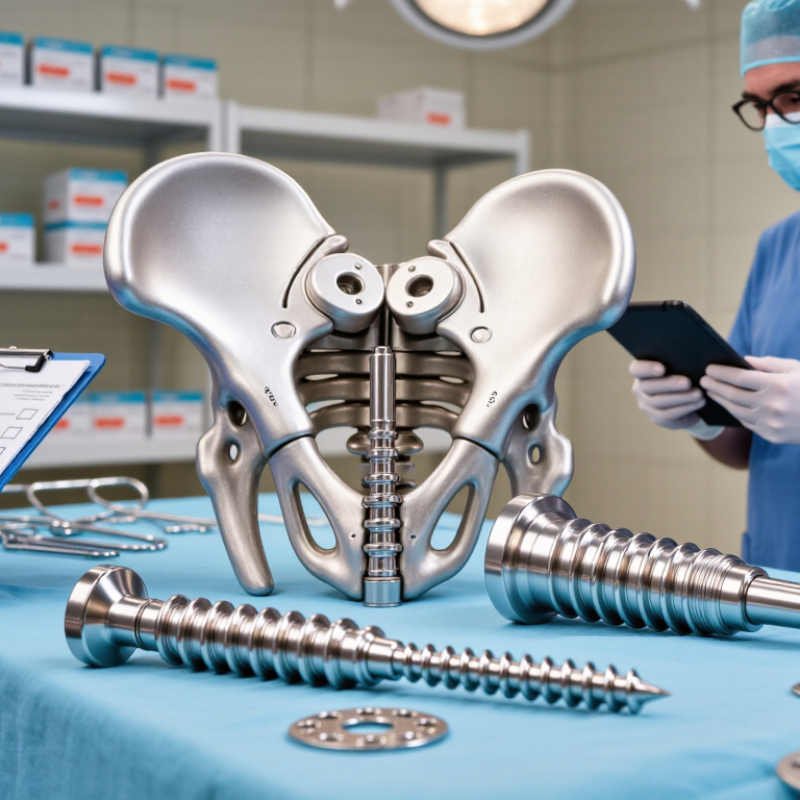
Define the clinical need before comparing quotations. Specify the procedure, diagnosis, patient population, and expected annual case volume. Record key anatomical considerations, including bone quality, deformity, and available size range. Ask surgeons to state required fixation options, bearing surfaces, and instrumentation. Keep the criteria measurable. “Preferred” is not a specification.
The UK National Joint Registry’s 2023 annual report covers more than three million recorded joint replacement procedures. Its long-term revision data can help teams assess implant performance beyond purchase price. The Australian Orthopaedic Association National Joint Replacement Registry’s 2023 report also draws on more than 1.5 million procedures. Use registry evidence carefully: patient mix and follow-up differ, so headline survival figures do not guarantee identical local results.
Write procurement requirements around clinical fit and reliable use. Confirm instrument availability, sterilization workflow, staff training, traceability, and delivery lead times. Check compatibility across components; small mismatches can disrupt a case. This step is easy to rush. It shouldn’t be. Include a process for reviewing outcomes and adverse events after implementation. Some needs will remain uncertain, especially when local case numbers are small. State that uncertainty, and seek multidisciplinary review before locking specifications.
Before requesting orthopedic implant quotes, define the exact device and intended use. A femoral stem and a fixation screw may follow different regulatory pathways. Ask each supplier for the relevant clearance or approval documents, product labeling, and traceability records. Check that the legal manufacturer, manufacturing site, and catalog number match across the documents. Small mismatches matter.
The WHO’s 2017 Global Atlas of Medical Devices reported that 87% of responding countries had a national medical device policy, while 58% reported a national authority responsible for regulatory controls. The gap is a reminder: policy alone does not verify a specific implant.
Check requirements in the destination market, then confirm certificates through the issuing authority where possible. Request quality-system evidence, such as a current ISO 13485 certificate, and verify its scope and expiry date. Ask for lot-level traceability, sterilization validation, and a process for field safety notices. Keep the answers on file.
Look closely. A polished certificate can still cover the wrong site or product category. Supplier references and complaint-handling records add useful context, but they do not replace regulatory checks. I would also document unanswered questions; procurement teams sometimes move on too quickly. WHO, Global Atlas of Medical Devices, 2017.
How to Procure Orthopedic Implants Step by Step: Compare Implant Options, Evidence, and Total Costs
Compare implant options against the procedure, patient profile, and surgeon requirements—not catalogue claims alone. Review materials, fixation methods, sizes, compatibility, and instrument needs. Then check clinical evidence. The American Joint Replacement Registry’s 2023 Annual Report draws on millions of hip and knee procedures, providing real-world context for implant use and revision patterns. Use registry findings to ask specific questions about comparable patients and follow-up periods. A newer design is not automatically a better choice.
Build a like-for-like cost comparison. Include the purchase price, reusable instruments, sterilization, storage, staff training, and likely replacement or revision costs. A low unit price can hide extra tray handling or inventory burden. OECD’s Health at a Glance 2023 reports wide variation in hospital length of stay after hip replacement across countries, a reminder that care pathways affect total costs. Local costs will differ. Document assumptions, data sources, and any missing evidence; procurement teams often have to work with incomplete price data. Be candid about uncertainty. Compare outcomes and costs over the same time horizon, and have clinical and finance teams review the final shortlist together.
Step 1 — Screen material options: This chart compares typical elastic modulus values, a measure of stiffness, in gigapascals (GPa). Values are approximate and can vary by alloy, manufacturing process, and testing method. Use material properties as an initial comparison—not as proof of clinical superiority or a substitute for device-specific evidence. Before purchase, review regulatory status, clinical outcomes, compatibility, and the total cost of ownership, including instruments, training, and ongoing support.
Before approving an orthopedic implant purchase, match the request to the procedure, surgeon preference, and approved clinical specifications. Confirm the catalog identifier, sizes, instruments, and any required accessories; a small mismatch can delay a case. Then document clinical, finance, and supply-chain approval in the purchasing system. AHRMM describes supply chain as a major hospital expense, often around 30% of operating costs, so compare total cost—not just the unit price. Include freight, instrument sets, storage, and unused-item handling. Check the figures carefully.
The contract should state pricing, volume commitments, delivery windows, substitutions, warranty coverage, training, and service responsibilities. Specify how lot and serial data will be recorded, and who acts when a recall notice arrives. Deloitte’s 2023 Global CPO Survey reported that 71% of procurement leaders prioritized cost reduction, underscoring the need for clear, measurable terms. Still, the cheapest offer may not be the safest operational choice. Ask clinical users to review the final schedule and confirm that promised stock levels fit actual case patterns. Record exceptions, approval dates, and the authorized signatories before issuing the purchase order. I have seen teams rush this step; the awkward detail is that unclear return terms can matter as much as price.
How to Procure Orthopedic Implants Step by Step
Coordinate Delivery, Inspection, and Traceability
Agree on the delivery window with the surgical team, receiving staff, and supplier before placing the order. Confirm the procedure date, required sizes, quantities, and approved delivery location. Ask how temperature-sensitive or sterile items should be handled during transit. A delivery that arrives at the wrong dock can delay checks, even when the shipment is complete. Keep a named contact available for schedule changes.
At receipt, compare the packing list with the purchase order and inspect each package for damage, moisture, broken seals, or unreadable labels. Check item descriptions, sizes, lot or serial numbers, and expiry dates where applicable. Follow your facility’s process for recording device identifiers and linking them to the patient record. If anything is missing or questionable, segregate it and notify the appropriate procurement or clinical lead before use. Small discrepancies are easy to overlook during a busy shift; that risk deserves honest attention.
Tips: Photograph damaged outer packaging, record the delivery time, and keep inspection notes with the receiving record. Verify that traceability details remain readable after items move into storage. Recheck the process periodically—written procedures can miss practical handoff problems.
Specify the exact device and intended use. A femoral stem and a fixation screw may follow different regulatory pathways.
Request relevant clearance or approval documents, product labeling, and traceability records. Match the manufacturer, manufacturing site, and catalog number across them. Small mismatches matter.
Check requirements in the destination market. Where possible, confirm certificates with the issuing authority. Check the quality certificate’s scope and expiry date.
Ask for lot-level traceability, sterilization validation, and a process for field safety notices. Keep answers on file.
Match the request to the procedure, surgeon preference, and approved clinical specifications. Confirm catalog identifiers, sizes, instruments, and required accessories.
Compare total cost, not just unit price. Include freight, instrument sets, storage, and unused-item handling. Check the figures carefully.
State pricing, volume commitments, delivery windows, substitutions, warranty coverage, training, and service responsibilities. Specify how lot and serial data will be recorded.
Ask clinical users to review the final schedule and compare stock levels with actual case patterns. Record exceptions, approval dates, and authorized signatories. Return terms deserve attention, too. Teams can still rush this step.
What is the standard procurement process for orthopedic implants? It begins by defining the clinical needs, intended procedures, patient considerations, and practical requirements such as implant specifications, quantities, and delivery timelines. Procurement teams then verify that products meet applicable regulatory requirements and assess supplier credentials, quality systems, and ability to provide reliable support.
Next, clinicians and purchasing staff compare suitable implant options using available clinical evidence, compatibility, usability, and total costs—not just the purchase price. After selecting an option, authorized stakeholders approve the purchase and finalize contract terms, including pricing, delivery expectations, and service arrangements. The process concludes with coordinating delivery and inspecting shipments against the order. Accurate documentation, lot and serial number records, and clear traceability procedures help ensure that implants can be tracked throughout their handling and use.

Nipa Orthopedic Implants