Basic Information
Model NO.:QT500-7 Rail Shoulder
Customized:Customized
Certification:ISO14001, ISO9001
Type:Shoulder
Transport Package:Cartons, Woven-Bags or Gunny-Bags in Wooden Cases
Origin:China
HS Code:8602900000
Production Capacity:20000PCS/Day
Product Description
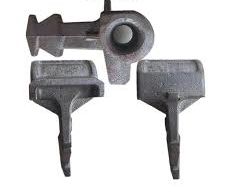
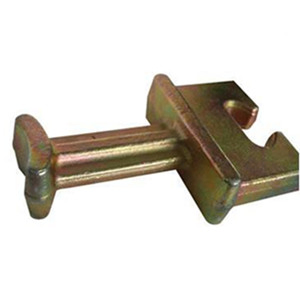
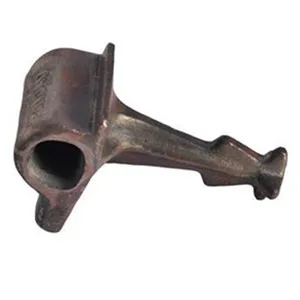
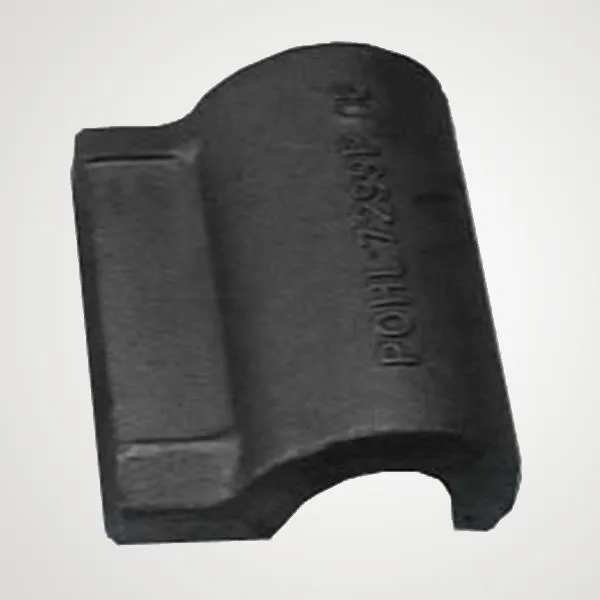
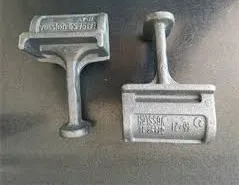
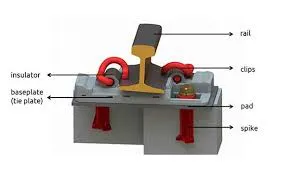
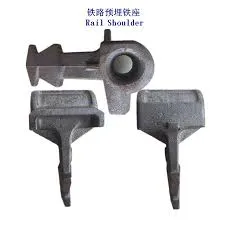
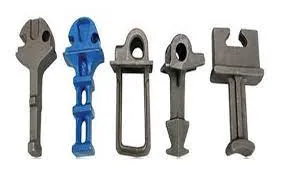
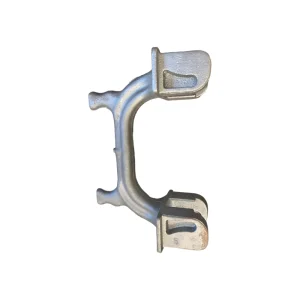
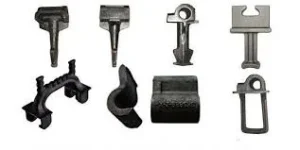
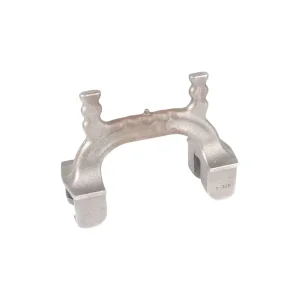
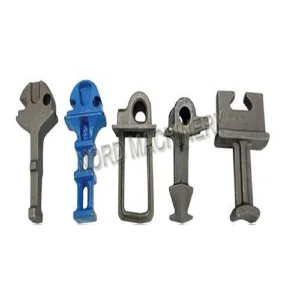
Rail shoulder is cast in the concrete rail ties to fix the elastic rail clips. There are two types of rail shoulders available, the cast-in shoulder and the weld-on shoulder, both of which are used for the fixing of elastic rail clips.
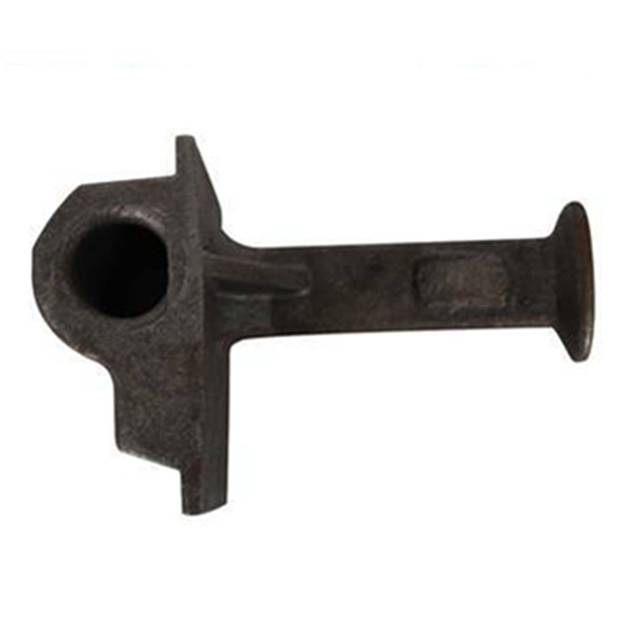
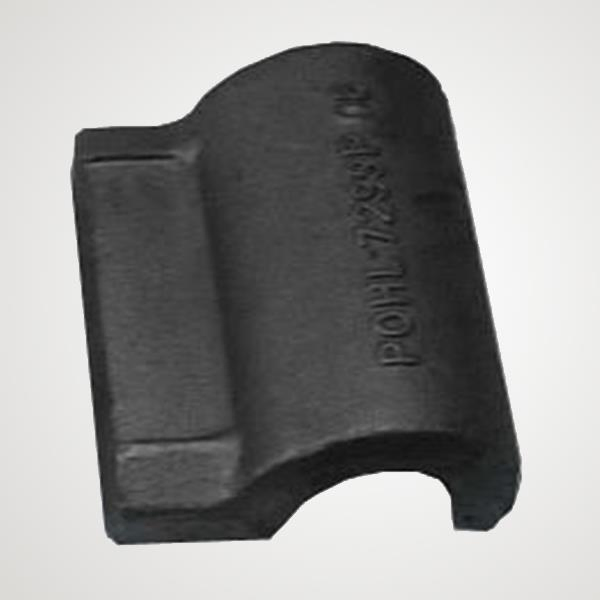
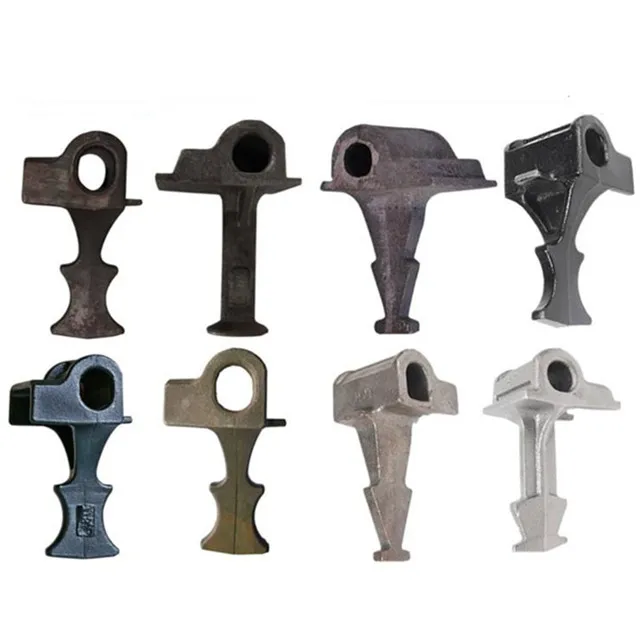
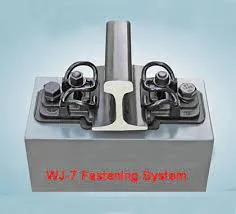
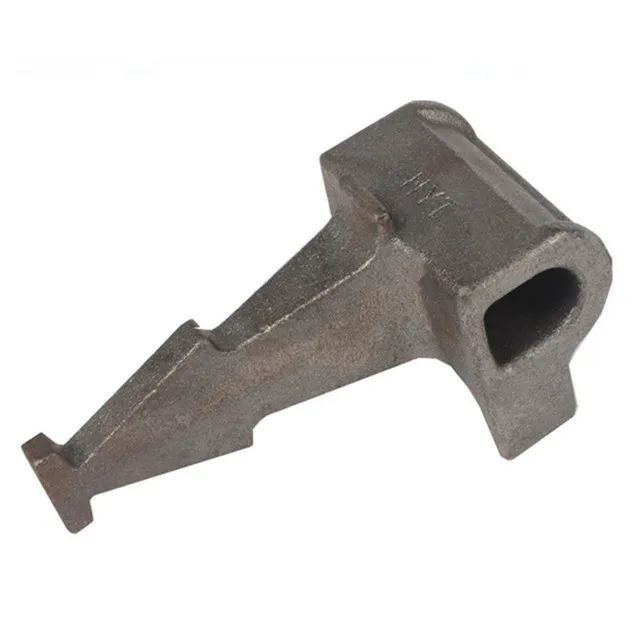
The casting shoulders as the embedded part of the rail way fastening system are pressed in concrete sleeper and work together with the E clip to fasten the rail. The cast in shoulder is made by casting from iron, such as, GB/T 1348-1988, NF EN 1563(1997), ISO1038, DIN 1693, JIS G5502 (2001), KS D 4302, GOST 7293(1985) or BS EN 1563(1997).
| Specifications |
UIC54 |
UIC60 |
Others |
| Application |
Standard UIC54 |
Standard UIC60 |
115RE, 50kg rail, 60kg rail, BS80lbs, BS100lbs, etc. |
| Material Grade |
QT500-7 |
QT450-10 |
QT400-15 |
| Standard |
GB 1348-88 |
GB 1348-88 |
GB 1348-89 |
Cast-in Rail Shoulder
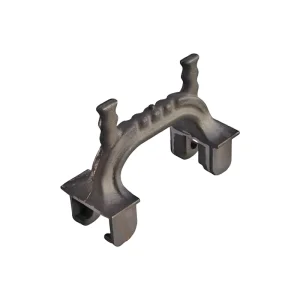
The casting shoulders as the embedded part of the rail way fastening system are pressed in concrete sleeper and work together with the E clip to fasten the rail. Available types include Single Stem Iron Shoulder for pre-stressed concrete ties and Twin Stem Iron Shoulder for Bi-Block or Twin Block concrete ties.
Mechanical Property
| Material |
Tensile Strength (Mpa) |
Yield Strength (Mpa) |
Elongation (%) |
| QT400-15(GGG40) | 400 | 250 | 15 |
| QT450-10(GGG45) | 450 | 310 | 10 |
| QT500-7 (GGG50) | 500 | 320 | 7 |
Chemical Composition Requirement
| Material |
C |
Si |
Mn |
P |
S |
| QT400-15 | 3.6-.36 | 3.0-3.2 | 0.5 | 0.07 | 0.02 |
| Qt450-10 | 3.4-3.9 | 3.7-3.0 | 0.5 | 0.07 | 0.03 |
| QT500-7 | 3.4-3.8 | 2.5-2.9 | 0.6 | 0.08 | 0.025 |
Weld-on Rail Shoulder
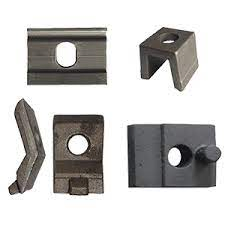
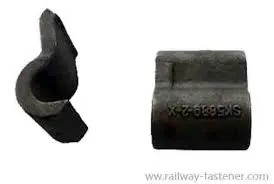
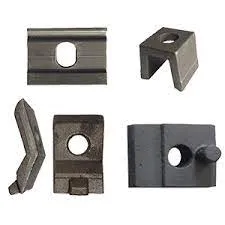
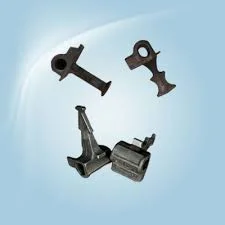
The weld-on shoulder is used at the typical position of rail where the rail shoulder is weld on flat steel plate rather than the standard tie plate. The production method is hot forging, fabricated according to AREA standard. The steel material type can be low or medium carbon steel. These can be welded onto longer length steel sleeper sections or bearers for switch and crossing layouts.
Frequently Asked Questions
What is the primary function of a rail shoulder?
Rail shoulders are used to fix elastic rail clips to the base plate or concrete ties, ensuring the stability and safety of the railway track.
What are the differences between cast-in and weld-on shoulders?
Cast-in shoulders are embedded directly into concrete sleepers during casting, while weld-on shoulders are welded onto flat steel plates or steel sleepers.
Which materials are used for cast-in rail shoulders?
They are typically made from ductile iron (e.g., QT500-7, QT450-10, QT400-15) following standards like GB/T 1348, ISO1038, or DIN 1693.
Are your rail shoulders compatible with UIC standards?
Yes, we produce rail shoulders suitable for UIC54, UIC60, 115RE, and various other international rail specifications.
What is the production capacity for these rail components?
The production capacity is approximately 20,000 pieces per day, ensuring timely delivery for large-scale projects.
Can the weld-on shoulders be used for switch and crossing layouts?
Yes, weld-on shoulders are highly cost-effective and useful for switch and crossing layouts where specific positioning is required by the design.
 Nipa Orthopedic Implants